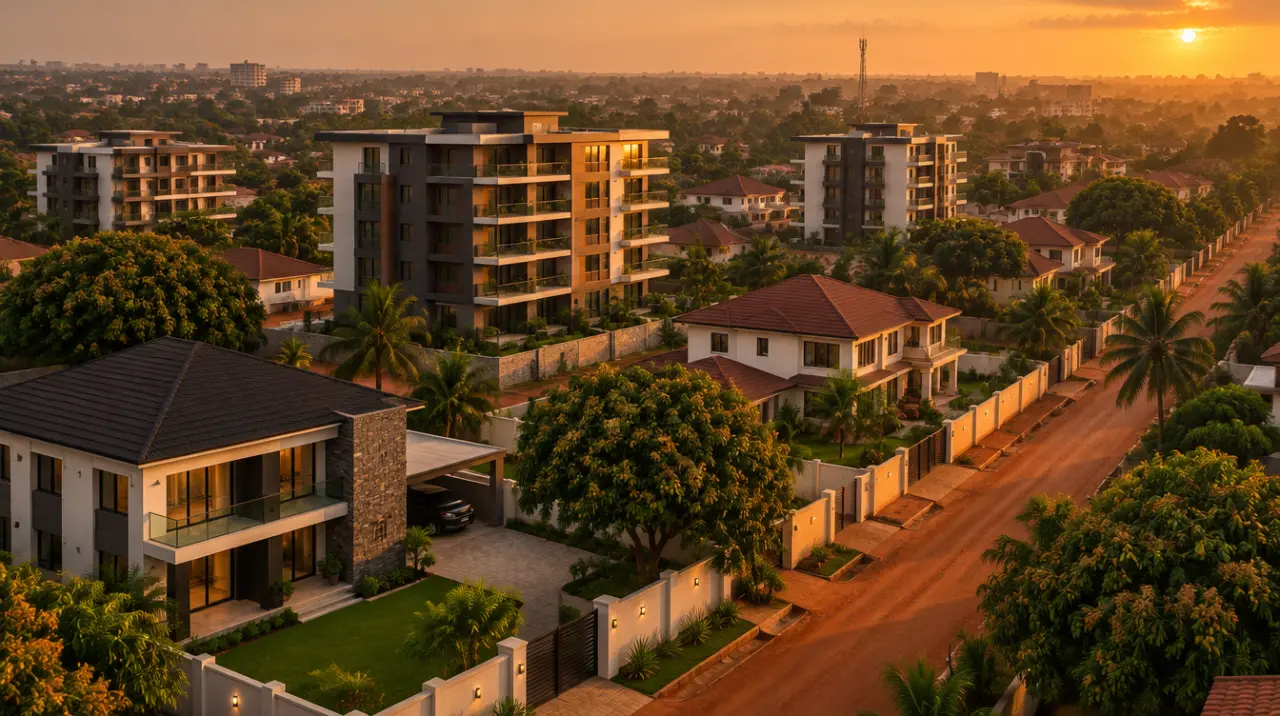
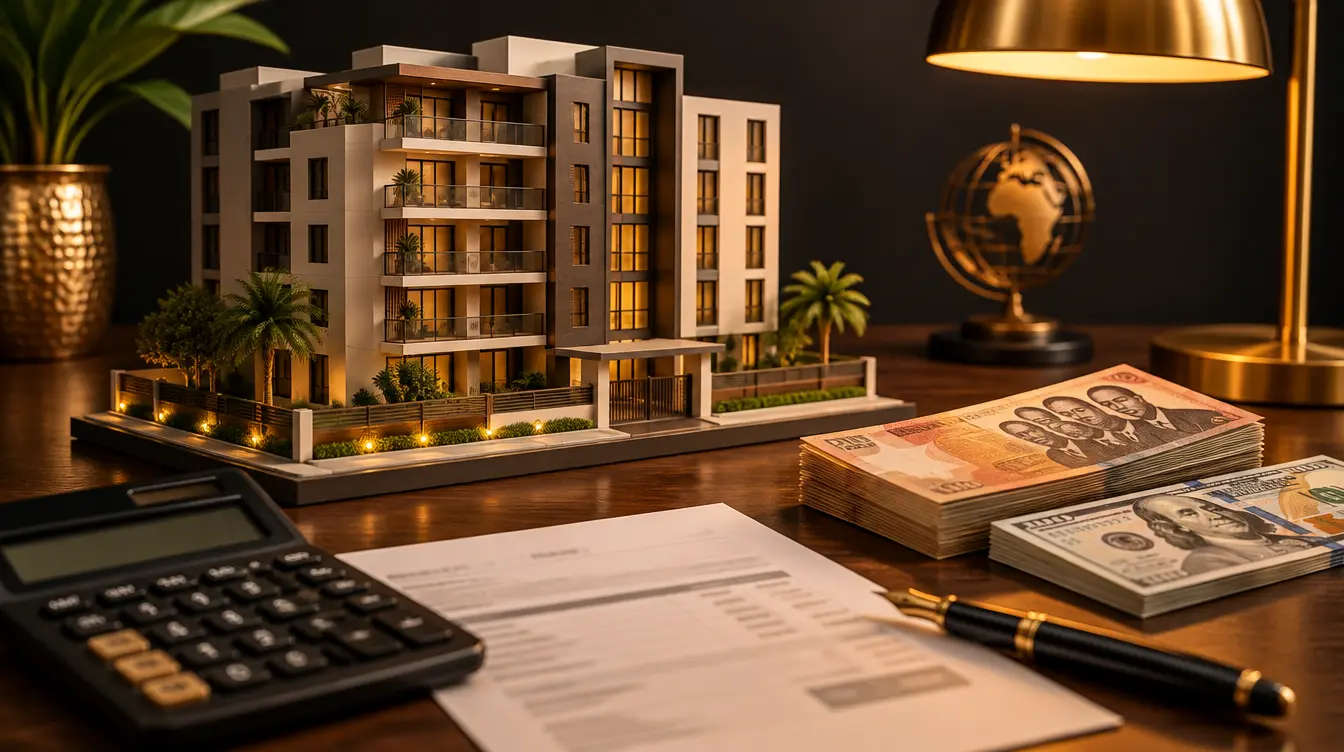
Since 1 January 2026, buying a new home from a developer in Ghana has carried a much heavier tax. The new VAT Act moved estate developers off the old 5% flat rate and onto the full standard rate, which works out at 20% once the two levies are added. Developers have warned that it is pushing up prices, and buyers are feeling it in new price lists and payment plans. Here is what changed, who pays it, and how to protect yourself.
Key takeaways
- The Value Added Tax Act, 2025 (Act 1151) took effect on 1 January 2026 and scrapped the VAT Flat Rate Scheme that estate developers used.
- Homes sold by estate developers now attract VAT of 15% plus the NHIL (2.5%) and GETFund levy (2.5%): 20% in total, up from a 5% flat rate.
- Developers can now claim back the VAT they pay on materials and services, which softens the increase, but the real estate developers’ association says it is still making housing less affordable.
- A home sold by someone who is not an estate developer, such as a private owner selling their house, remains exempt, and so does residential rent.
What changed in January 2026
Ghana overhauled its VAT system with the Value Added Tax Act, 2025 (Act 1151), which replaced the old VAT Act from 1 January 2026. For most businesses the reform was meant to simplify things and lower the overall burden: the 1% COVID-19 levy was abolished, and the NHIL and GETFund levies were “recoupled” so that businesses can claim them back as input tax. Accounting firm Crowe puts the old effective burden at about 21.9% and the new one at 20%.
For real estate, though, the reform went the other way. Under the old law, estate developers could charge VAT at a flat rate of 5% on the homes they sold. Act 1151 abolished that flat rate scheme. Estate developers must now charge VAT at the standard rate, with the levies on top.
| Before 1 January 2026 | From 1 January 2026 | |
|---|---|---|
| New home sold by an estate developer | 5% VAT flat rate | 15% VAT + 2.5% NHIL + 2.5% GETFund = 20% |
| Can the developer reclaim VAT on materials? | No, not under the flat rate | Yes, as input tax |
| COVID-19 levy | 1% | Abolished |
| Home sold by a non-developer (e.g. private resale) | Exempt | Exempt |
| Residential rent | Exempt | Exempt |
| Commercial rent (suppliers on the flat rate) | 5% flat rate | Standard rate |
Sources: KPMG Ghana tax update (February 2026), Crowe Ghana (January 2026), GhTaxClub (January 2026). Confirm your own position with the Ghana Revenue Authority or a tax adviser.
How much more does a new home cost?
The headline change is large: a tax of 5% became a tax of 20%. If a developer kept its pre-tax price exactly the same, a home that cost $105,000 including VAT at the old 5% rate would now cost $120,000 including VAT at 20%, about 14% more.
A 5% tax became a 20% tax. Even after input credits, few developers can absorb that without raising prices.
In practice the rise is usually smaller than that, for two reasons. First, developers can now reclaim the VAT they pay on cement, steel, finishes and professional services, which lowers their costs. Second, competition for buyers limits how much of the tax can be passed on. KPMG nonetheless warned that the change “could potentially increase the pricing of houses despite the deductibility of input taxes”, and that it may widen the affordability gap.
No official figure yet shows how much prices have actually risen because of the VAT, and it varies from project to project. What buyers have seen in 2026 is new price lists, revised payment plans and, in some cases, VAT added as a separate line on invoices.
What developers are saying
The Ghana Real Estate Developers Association (GREDA) has called for the 20% VAT on housing to be reviewed. At its annual general meeting in August 2026, GREDA’s president, Dr James Condua Orleans-Lindsay, said the tax had “further increased the financial burden on prospective homeowners” and warned that it could undermine the viability of developers and push up the cost of housing further. GREDA said it was awaiting a resolution from the Ministry of Works, Housing and Water Resources and the Ghana Revenue Authority.
The Ministry’s acting director of housing acknowledged the association’s concerns and said he would raise them with the relevant authorities. As of November 2026, no change to the rate has been announced. Ghana’s housing deficit is estimated at more than 1.8 million units, which is why the cost of new homes matters well beyond the developers themselves.
Who pays it, and who does not
You pay it if you buy from an estate developer
Apartments, townhouses and houses bought new from a developer are standard-rated. Some developers say VAT also applies to reservation fees and to any instalments paid after 1 January 2026, even if you agreed the purchase earlier, while payments received in full before that date are not affected. If you are on a payment plan that started in 2025, ask your developer in writing how VAT applies to your remaining balance.
You do not pay it on a private resale
The new law keeps the exemption for “supplies of immovable property” by sellers who are not estate developers. If you buy a house from its private owner, there is no VAT on the sale, although stamp duty, legal fees and registration costs still apply.
Renting a home is not affected
Residential rent (“accommodation in a dwelling”) remains exempt, so the change should not add VAT to your rent. Commercial landlords who used the old flat rate now charge the standard rate.
What this means if you are buying in 2026
- Ask whether the price includes VAT. Get the VAT-inclusive total in writing, in the currency you will pay in.
- Read the tax clause in your sale and purchase agreement. Check who bears the cost if tax rates change during construction.
- Ask for a proper VAT invoice for each payment, from a VAT-registered company.
- Compare new and resale. A well-built resale home carries no VAT, which can narrow the gap with a new unit. Factor in renovation and the title checks a resale needs.
- Watch for changes. GREDA is lobbying for a review, so the rules for 2027 could still move. Follow our Media page for updates.
For the wider picture on prices, see Accra property prices in 2026, and before you commit to a new development, read how to vet a developer before you pay.
Plaisir Realty
Know the full price before you sign
Plaisir Realty brings more than sixteen years of experience in Ghana’s property market to every purchase. Our real estate data hub tracks prices, developer profiles, project ratings and title checks across Accra, and we review sale and purchase agreements free of charge for our buyers, including how VAT is charged. For data-backed answers before you buy, start with Plaisir Realty.
Frequently asked questions
Is VAT on new homes in Ghana 20% in 2026?
Yes, for homes sold by estate developers. Since 1 January 2026 they charge VAT at 15% plus the NHIL and GETFund levies of 2.5% each, which is 20% in total. Before that, they charged a flat rate of 5%.
Do I pay VAT if I buy a house from a private owner?
No. Sales of immovable property by sellers who are not estate developers remain exempt from VAT. Stamp duty and other buying costs still apply.
Is there VAT on rent in Ghana?
Residential rent is exempt. Commercial rent from suppliers who were on the old flat rate is now charged at the standard rate.
Why did VAT on houses go up?
The VAT Act, 2025 abolished the flat rate scheme that estate developers used, moving them onto the standard rate. In return, developers can now claim back the VAT they pay on their own inputs.
Sources: KPMG Ghana, Tax Flash Alert, February 2026; Crowe Ghana, January 2026; GhTaxClub, January 2026; Graphic Online, GREDA AGM, August 2026; Devtraco Plus. This article is general information, not tax advice.